Sunday, 17 October 2010

Sort it out, Three


After having waited an eternity for Three to sort out a Froyo (Android v2.2) update for my HTC Desire phone, I finally found out it was available last night and - naively, with retrospect - applied the update straight-away.

All proceeded nicely, and around 20 minutes later my phone restarted and - hooray! - there was Froyo in all of its glory. Okay, nothing much has changed in reality, although the new Portable Wifi Hotspot facility is brilliant!

There was just one, ever-so-small problem. As part of the update, I'd lost all access to the Android Market. A few minutes on Google showed that I was not alone. To cut a long story short, a spent the next 2 hours:
  1. Downloading the MyBackup APK on my laptop and then transferring it to my phone via USB cable (luckily I had installed previously a file manager app allowing me to find and run the installation - not sure how I could have done this otherwise)
  2. Backing up all of my data and applications onto my SD card
  3. Performing a factory hard reset
  4. Restoring all of my backup data (including spending about an hour having to set up my email accounts from scratch, etc)
In short, I'm not impressed by this whole shambles. Quite frankly, in this day and age, I shouldn't have to have a reasonable grasp of IT and waste hours sorting out an issue that should not have occurred in the first place. My phone is a standard-issue HTC Desire from Three (i.e. not rooted or unlocked); there is absolutely no excuse for the update to have screwed up in this way.

Contrast this to me upgrading my home PC recently to Windows 7. Contrary to my expectations (based on having performed multiple re-installations on my computers over the years, from Win98SE onwards), this was almost completely pain-free, the only manual update I needed to do afterwards was to locate and install a WIn7-compatible driver for my laser printer.

If Microsoft is now superior at updates, then Three really has a problem. Sort it out!!

Saturday, 24 April 2010

Scientists show Mediterraneans 'get it up' more easily


We all know that those Mediterraneans have it pretty good - nice weather, good food, relaxed lifestyle, lovely countryside, etc, etc, ad nauseam. Well, it's not news that a major factor behind why the locals seem to have long, relatively disease-free lives is largely a result of their diet: lots of unsaturated fats (e.g. olive oil), fish, nuts and so on.

An article cited on Twitter recently caught my eye, as it would appear that scientists (yep, them again) have shown that said diet can also significantly improve erectile dysfunction.

Actually, this is also not surprising. Systemic damage to the vasculature is exactly that - if you have managed to screw up your arteries and veins in your heart and brain, there's no reason why the same damage hasn't been done to the rather more delicate issues located elsewhere. However, what got me thinking was how this study was run... Think about it, and then tell me honestly how you think the experiment was conducted...? ;-)

A little research on PubMed pulled up another scientist who quite clearly chose a much more interesting field of study than mine ever was - take a bow, Katherine Esposito of the University of Naples, who published this in 2006:

Esposito K, et al. Mediterranean diet improves erectile function in subjects with the metabolic syndrome. Int J Impot Res 2006;18(4):405-10.

Men with the metabolic syndrome demonstrate an increased prevalence of erectile dysfunction (ED). In the present study, we tested the effect of a Mediterranean-style diet on ED in men with the metabolic syndrome. Men were identified in our database of subjects participating in controlled trials evaluating the effect of lifestyle changes and were included if they had a diagnosis of ED associated with a diagnosis of metabolic syndrome, complete follow-up in the study trial, and intervention focused mainly on dietary changes. Sixty-five men with the metabolic syndrome met the inclusion/exclusion criteria; 35 out of them were assigned to the Mediterranean-style diet and 30 to the control diet. After 2 years, men on the Mediterranean diet consumed more fruits, vegetables, nuts, whole grain, and olive oil as compared with men on the control diet. Endothelial function score and inflammatory markers (C-reactive protein) improved in the intervention group, but remained stable in the control group. There were 13 men in the intervention group and two in the control group (P=0.015) that reported an IIEF score of 22 or higher. Mediterranean-style diet rich in whole grain, fruits, vegetables, legumes, walnut, and olive oil might be effective per se in reducing the prevalence of ED in men with the metabolic syndrome.
Turns out Dr Esposito didn't feed a bunch of fat blokes olive oil and garlic, show them porn and then whip out a tape measure... The participants stuck to a diet and then 'self-reported their sexual performance' using the International Index of Erectile Function questionnaire. Not quite as fun, I'm sure you'll agree.

My suggestion for Dr Esposito's next study is to determine whether there is a direct inverse correlation between increased sexual performance following adherence to a Mediterranean diet including lots of stinky garlic, and the number of opportunities to make use of that increased performance... ;-)

Monday, 29 March 2010

First step for Pharma to regain trust - quit being defensive!


Having worked in the pharmaceutical industry for a while now as a communications consultant, I have seen - like many others - how often the major players seem to get themselves into trouble with the general public. Sometimes this happens through no fault of their own, other times due to things they have done which literally cause my head to bang quite painfully on my desk in exasperation.

The cartoon above is probably quite a good illustration of how the industry is perceived by large swathes of the general public; quite frankly with good reason. Hardly a day goes by without some fresh scandal or negative piece of media coverage that reinforces that perception, and serves to undermine the immense good that the industry has and continues to do for the world population in general.

I have been following the #hcsmeu group on Twitter for a while now, and three contributors have recently posted on this topic:

@PedroLuisGS: To gain trust, pharma companies should change their business concept: drugs are not an endpoint but a path to regain wellness
@andrewspong: Pharma's rep[utation] is in tatters. After all the conv[ersation]s about trust, how about championing the patient's needs to ameliorate the former?
@navatanee: The image of pharma is as bad as the one of tobacco or financial industry. No innovation, just marketing. TRUST??
These tweets all make excellent points. In any holistic healthcare system, a prescription medication given to treat a particular illness is not the final step in the management algorithm, and current 'push' marketing strategies employed by pharmaceutical companies can very easily serve to erode public trust. Championing patient needs is clearly a great idea, but based on the current view of Pharma, if they were to start doing this would anyone really not question their motives? As much as I agree with all three comments, I think they all miss the point:


For me, there is one simple step Pharma could take immediately that would go a long way to start rebuilding the 'trust' that has been lost, and simultaneously help it to avoid the holes it regularly falls into from a communications standpoint:

Stop being so defensive about what you are! Pharma is a BUSINESS that exists SOLELY to MAKE MONEY for its SHAREHOLDERS. Stop tying yourselves into knots trying to hide that fact, and try instead to find ways to make your business model a win-win scenario for all concerned.

Okay, so this may come across as a bit heartless, but that doesn't change the fact that it is true. Governments can't (and probably would not) invest the billions of dollars it takes to develop a single new drug to market (it they could, malaria/TB would have been cured long ago), so it falls to Pharma and its shareholders to risk their own money in the hope of a decent return. If they did not do this, then there would be no drugs. So why all of the guilt?

For me, the real failure of communication from Pharma has been to come clean and talk about their business model with the public. Start a proper, grown-up conversation with doctors and patients about how the whole healthcare system can be improved.

More, better drugs = better outcomes for patients = more profit for Pharma = more, better drugs, and so on...

Open and transparent conversation (i.e. via social media, rather than one-way advertising) between Pharma, doctors and patients = better selection of/adherence to/trust in treatment = better outcomes = well, you get the picture...

In this new, internet-enabled age, everyone has the power to effect change in how things are done. We can all make a real difference, as long as we cast off the dogma that has held us back in the past.

Wednesday, 17 March 2010

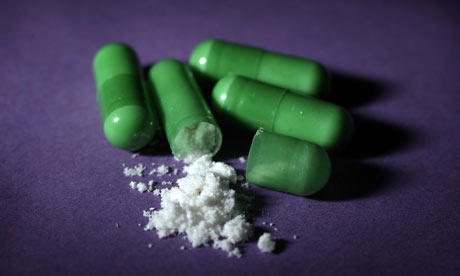
Banning mephedrone is not the answer


In the news today is the sad story of two teenagers who died in Scunthorpe this week, allegedly as a result of taking the 'legal high' mephedrone while out drinking with friends. Predictably, we now have calls for this drug to be banned - indeed, classified as a Class A drug alongside ecstacy and heroin.

I've blogged on the inherent stupidity of our current drug laws previously, so won't go into it again (NB: just to make clear, the only mind-altering drug that I self-administer is ethanol, and in limited quantities at that). However, it's worth making the point - mephedrone has been in use as a recreational drug for some time, across the world. In that time, apparently the number of deaths linked to its use is next to zero. Obviously, there will be side effects - particularly with high doses and/or long-term use - but this is evidently true for alcohol and smoking; I don't see either of these being re-classified as Class A drugs any time soon, do you...?

A key point of all of this for me was that the teenagers in question were 18 and 19 years of age, i.e. adults. Nothing I've read suggests that they were forced to take mephedrone against their will, or that it was a tragic accident. In the end, it seems that they thought they could mess with their minds with no consequences, and were sadly proved wrong.

In the end, more effective education and open conversation will always have more impact than simply issuing a blanket ban. It's the shame that banning things is so much easier...

Sunday, 7 February 2010

Bust size and hitchhiking: who said science is boring...?

For anyone thinking that science (specifically psychology) is a bit dull, you’ve clearly been reading the wrong journals… Take this particularly pleasing example:


Yes, you read that right:
"To test the effect of a woman's bust size on the rate of help offered, 1200 male and female French motorists were tested in a hitchhiking situation. A 20-yr.-old female confederate wore a bra which permitted variation in the size of cup to vary her breast size. She stood by the side of a road frequented by hitchhikers and held out her thumb to catch a ride. Increasing the bra-size of the female-hitchhiker was significantly associated with an increase in number of male drivers, but not female drivers, who stopped to offer a ride."

I have to tip my hat to Dr Guéguen; having looked through some of his (I assume that it is a 'he', although I realize that is based purely on the fact that I would have loved to have done the research myself) other published articles, he has been able to get funding for some truly original fieldwork, albeit with entirely predictable outcomes:
  • Gueguen N. The receptivity of women to courtship solicitation across the menstrual cycle: a field experiment. Biol Psychol 2009;80(3):321-4. "It was found that women in their fertile phase, but not pill-users, agreed more favorably to the request than women in their luteal phase or in their menstrual phase"
  • Guéguen N, et al. Sound level of environmental music and drinking behavior: a field experiment with beer drinkers. Alcohol Clin Exp Res 2008;32(10):1795-8. "High level volume led to increased alcohol consumption and reduced the average amount of time spent by the patrons to drink their glass"
  • Guéguen N, et al. Women's eye contact and men's later interest: two field experiments. Percept Mot Skills 2008;106(1):63-6. "Longer duration of eye contact was associated with an increase of smiling."
  • Gueguen N. Women's bust size and men's courtship solicitation. Body Image 2007;4(4):386-90. "It was found that increasing the breast size of the female confederate was associated with an increasing number of approaches by men."
So, in summary, the inevitable conclusion is that success in any number of life's trials and tribulations for women can be made significantly more likely by purchasing an inflatable bra now available from all good retailers... ;-)

PS: Just spotted a fantastic quote in that last link: ""We predict women all over the UK will be storing these in their desk drawers ready for the mistletoe moment with the office hunk. Plus they're easily and quickly deflated when Nigel from Accounts approaches after a few glasses of mulled wine."

Tuesday, 26 January 2010

'United Nations of Science' - nice idea that will never work


I recently came across an interesting article in NewScientist, 'The United Nations of science: why we need it', written by a Lorna Casselton, foreign secretary of the Royal Society (??) and Emeritus Professor of Fungal Genetics at the University of Oxford.

In it, Prof Casselton introduces the InterAcademy Panel on International Issues (IAP):
"[The IAP is] a global coalition of national science academies from Albania to Zimbabwe. Its task this week is to agree a way forward for scientific advice to government - how the world of science, speaking as one, can reach out to policy-makers to help solve the critical global challenges we now face."
So far so good - as a scientist by training myself I can relate to that. She continues:
"The organisation's ambition is to become the most influential voice for the world's scientists amid the clamour of politicians and lobby groups.

IAP is also working hard to promote better science education, support young scientists and improve science communication. This is especially important in the developing world: IAP strives to help the poorest countries build their science, technology and advisory capacities and thus champion robust, evidence-based policy-making." (my emphasis)
 You see, here's where it all goes wrong. Prof Casselton starts her piece with:
"As the disappointment of the Copenhagen climate summit sinks in, you could be forgiven for despairing of science ever being put at the centre of international policy-making. But scientists are not giving up the fight."
Far from being any sort of disappointment, the failure of the Copenhagen climate summit was a great result for all those who have been following the incredible revelations from across the world that the case for anthopogenic global warming was completely overstated at best, and a complete fabrication and corruption of the scientific process at worst (have a look at the Watts Up With That blog for further details).

Quite frankly, I would have expected better from an Oxford Professor (although as a Cambridge alumnus perhaps I'm not surprised!) - I would love her in a follow-up article to explain how exactly climategate equates to 'robust, evidence-based policy-making'.

For me, climategate shows pretty well the dangers of scientists getting involved in politics (Prof David Nutt did and look what happened to him). They should stick to doing their experiments and advancing our body of knowledge; leave the dirty business of deciding what to do with the results to the politicians!

Saturday, 16 January 2010

Mad Scientist Syndrome - a significant and increasing burden on society


Science - in of itself - is pretty straight forward. You know the drill: review all of the knowledge on your chosen topic currently available; form a hypothesis which if verified by experimentation will extend that knowledge; perform said experimentation; discard hypothesis if results are not in agreement, otherwise publish hypothesis in Nature; repeat.

Obviously, medicine is in a number of ways a lot 'messier' than science, but exactly the same principles should apply. Epidemiology has no such excuse, since real people here are just numbers in a spreadsheet to be summed and averaged at will of the investigator. So, why do we continue to go through scare after hysterical scare about health matters - surely we should all be tired of it by now?

Cited on Dick Puddlecote's blog, I came across an excellent article by Simon Jenkins in the Guardian with a title which perfectly summarizes the problem: Swine flu was as elusive as WMD. The real threat is mad scientist syndrome.
"The BBC was intoning nightly statistics on what "could" happen as "the deadly virus" took hold. The chief medical officer, Sir Liam Donaldson, bandied about any figure that came into his head, settling on "65,000 could die", peaking at 350 corpses a day.

Donaldson knew exactly what would happen. The media went berserk. The World Health Organisation declared a "six-level alert" so as to "prepare the world for an imminent attack". The happy-go-lucky virologist, John Oxford, said half the population could be infected, and that his lowest estimate was 6,000 dead.

The "Andromeda strain" was stalking the earth, and its first victims were clearly scientists. Drugs were frantically stockpiled and key workers identified as vital to be saved for humanity's future. Cobra alerted the army. Morgues were told to stand ready. The Green party blamed intensive pig farming. The Guardian listed "the top 10 plague books".

If anyone dared question this drivel, they were dismissed by Donaldson as "extremists". When people started reporting swine flu to be even milder than ordinary flu, he accused them of complacency and told them to "wait for next winter". He was already buying 32m masks and spending more than £1bn on Tamiflu and vaccines. Surgeries refused entry to those with flu symptoms, referring them to a government "hotline" where prescription drugs were ordered to be made available without examination or doctor's note. Who knows how many died of undiagnosed illness as a result? Lines were instantly jammed. It was pure, systematic government-induced panic – in which I accept that the media played its joyful part."
Jenkins go on to make the point that we have been here before: remember SARS? What about BSE/CJD? To this list I would add AGW, although the list could go on and on. Every time it's the same: media quotes 'scientists' claiming that there is yet another major catastrophe just around the corner which, surprise surprise, means that we all have (a) give up more personal freedoms to the state, (b) pay more taxes, (c) stop enjoying something which we enjoy doing/taking that has been perfectly legal up till now, (d) live in a state of near-permanent anxiety or (e) any combination of the above.

Jenkins rounds off his article with the sad consequence of the ongoing farce of 'crying wolf' from our politicians and leading scientists/doctors:
"This is why people are ever more sceptical of scientists. Why should they believe what "experts" say when they can be so wrong and with such impunity? Weapons of mass destruction, lethal viruses, nuclear radiation, global warming … why should we believe a word of it? And it is a short step from don't believe to don't care."
 It's not meant to be like this...

Why can't drug policy be evidence-based?


Two recent articles on the vexed topic of illegal drugs caught my eye this week. The first was an interview in the Metro with Prof David Nutt, until recently the UK Government’s chief drugs adviser, who was fired after making 'outspoken' comments on how the country's current drugs policy is not fit for purpose.

Being a scientist by training, and working in the pharmaceutical industry where everything my clients and I do must be evidence-based and referenced, the glaring inconsistencies in the UK's drug laws have always perplexed me (writing as someone whose dabbling in mind-altering substances is strictly restricted to ethanol and the occasional bowl of Tira Misu) - smoking and alcohol are somehow okay (or at least legal) while drugs like cannabis and ecstacy are not. Even within the classification system there appears to be little evidence-based decision-making going on, with drugs being moved between bands on a seemingly regular basis with no clear justification.

Prof Nutt makes some pretty good points - to me at least - in his interview, for example:

"Alcohol is a drug that is most worrying to most parents and it is the drug that is most likely to damage young teenagers. One a day dies of alcohol poisoning and one or two a day die in a road traffic or other accident relating to alcohol – that’s why it is the most dangerous drug. We should be focusing our efforts on that, not pretending that other drugs are worse ... I am continuing to make a case that drug laws, to be fair and just, should properly reflect the harm to the person using and to society, and if they don’t do that then injustice will occur. More innocent non-drug-using people die from road traffic accidents and other damage from alcohol than any other drug."
Personally, I believe that adults should be free to do what they like with their own bodies, as long as they are fully aware of the potential consequences beforehand (for example, possible mental illness) and are willing to take responsibility for whatever may happen, and also as long as no-one else is harmed directly or indirectly as a result.

This leads to the second article, posted by Melanie Phillips on her blog at the Spectator. Phillips takes a very hard line on Prof Nutt's views and on those who consider that liberalization of the drug laws may be an avenue worth going down. Clearly, drugs policy is not my area, but one specific section sprang out:
"Nutt’s offence in crossing the line into opposition to government policy was merely the overt political expression of a position on drug law so irresponsible and potentially harmful, through its downplaying of the risks of drugs such as cannabis and ecstasy, that it should have barred him from public office long previously."
I freely admit that I have not performed a full literature review and analysis of the safety and toxicity of drugs like cannabis or ecstacy; however, what I have seen to date suggests to me that - while obviously not being risk-free - the potential dangers of either of these drugs are probably comparable in severity to drinking way too much on a night out or smoking 20 a day long-term.

As always, politics and people who are either simply ignorant or have vested interests always rear their ugly heads in any discussion on this topic. As a scientist by training, is it really too much to ask for some evidence-based decision-making??

Perhaps, as always, there is a conspiracy at work? ;-)

UPDATE: Have just found the Support Professor David Nutt: We want an evidence based drugs policy group on Facebook.

Monday, 4 January 2010

The inconvenient truth about peer review


I remember watching An Inconvenient Truth, Al Gore's documentary on man-made global warming, a few years ago. What with dire warnings of rising sea levels, more droughts, hurricanes and floods around the world, drowning polar bears and swarms of malaria-infested mosquitos poised to ravage Europe, the film certainly delivered its key message. I was depressed for a week afterwards.

It's a shame that it would appear that global warming may well be little, if not nothing, to do with human activity (specifically CO2 levels) at all. Worse, 'climategate' as this whole saga is now referred to, has been denounced by some to be all shady politics rather than based on proper science. Further details on this can be found on the excellent Watts Up With That blog, amongst many others.

Anyway, however this issue plays out, one aspect was particularly interesting to me - namely allegations that leading scientists supplying data to the Intergovernmental Panel on Climate Change (IPCC) interfered with the publication of manuscripts in peer-reviewed journals that went against the 'accepted' consensus.

Having been a research scientist myself, I had personal experience of the vagaries (and outright back-stabbing) that is the standard peer-review process. For those who have not had the pleasure, your paper - representing months or years of work - goes off to a journal you believe warrants a piece of research of this calibre. It is then sent off - usually on an anonymous basis - to be reviewed by 2-3 experts in the field, who are supposed to check it thoroughly for errors of fact, point out anything that might be missing, and/or suggests improvements. Assuming you didn't go for a ridiculously high profile journal, and you jump through the reviewers' hoops, voila - publication!

Except it often doesn't work like that. Anonymity is not always assured, since research areas are so narrowly-focused these days that everyone pretty much knows everyone else in the field so can guess who wrote the paper. One or more of your reviewers might hate you, your boss, one of your named co-authors, or your institution. He (or she) may not like your conclusion (whether or not it is correct is irrelevant) - particularly if it contradicts their own pet theory.

Your paper - which could be 100% factually correct with a sound conclusion - can then be vetoed by said reviewer, with no consequences for him (or her), and with little or nothing you can do about it. In the end, all you can do is pick yourself up, dust yourself off, and move onto the next journal. Eventually, you'll see your name in print.

Remember that this is common in science already, where pretty much the only thing on the line is personal reputation. Throw in global politics, deals involving trillians of dollars per year and massive vested interests and you truly have a process ripe for corruption.

Yet more airport security hassle

An article posted by Andrew Gilligan on the Telegraph website today caught my eye: in essence, he has articulated something which I am sure many people silently repeat to themselves over and over while standing in a never-ending queue at airport security, which is a variation of "is this hassle really worth it" (a question posed in increasingly colourful language depending on the length of the queue). Well, apparently not - a key passage follows (emphasis mine):

"In my documentary, Philip Baum, the editor of the magazine Aviation Security International, said he could not recall a single time when a bomb had been found using an airport X-ray machine alone. Airport security, he said, was "theatre", designed to reassure the public rather than to stop bombers. The Abdulmutallab case would seem to support this view.
Many airport X-ray machines cannot, in fact, detect most types of explosives: Baum ran a recent trial for a European government where a woman passed successfully through 24 different airports with the complete components of a bomb concealed on her body."
Gilligan goes on to make the point that airport security starts well before anyone presents themselves at the scanner; quite clearly, it was a failure of intelligence and information sharing by the security services that was to blame for the recent attempted bombing of a flight to Detriot. Having lost count of the number of times I have seen the people supposed to be studying the scanner monitor for suspect items either simply not looking or even chatting with colleagues, even the basics need revisiting!

Of course, this hasn't stopped the authorities from using this as an excuse to beef up security even further, as if flying wasn't unpleasant an experience enough already. Some of the more draconian steps being introduced for flights to the US include:
  • Customers to remain seated during final hour of flight
  • No access to hand luggage and a ban on leaving possessions or blankets on laps during this hour
Try to remember not to drink anything for the final two hours of your next flight or you may find your trip quite uncomfortable...

UPDATE: Perhaps not surprisingly, it turns out that the new all-body scanners that will now be rushed into our airports at massive expense do not detect a number of different materials, such as those used by the would-be Detroit bomber:
"Officials at the Department for Transport (DfT) and the Home Office have already tested the scanners and were not persuaded that they would work comprehensively against terrorist threats to aviation."